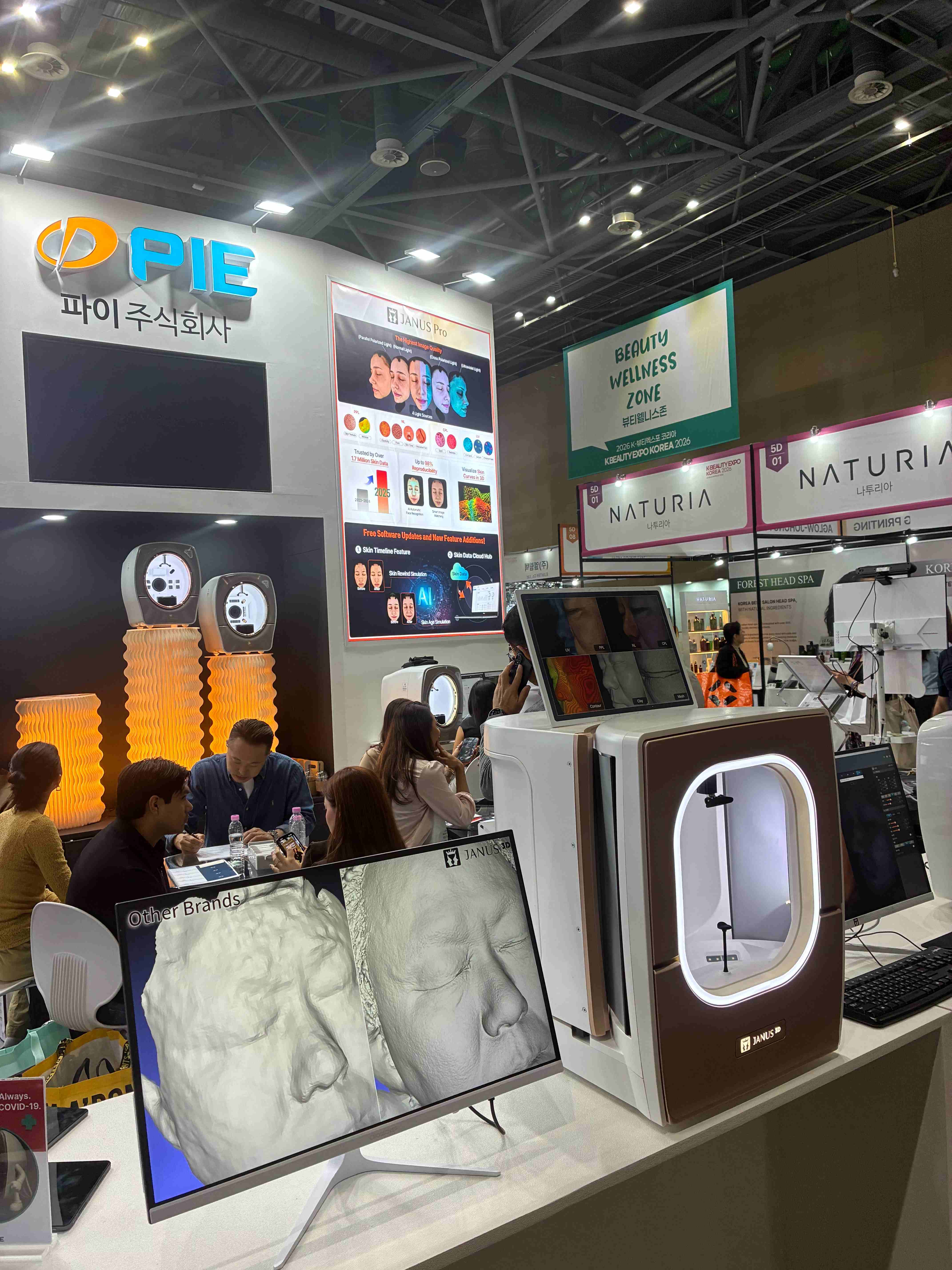


When reviewing photos after a lifting treatment, look at the same area in the previous and current images. The JANUS Pro capture history lets you compare how that area looked in the two sessions and explain what has changed. This article looks at what before-and-after photos can show and how to interpret the software’s elasticity results.
Use before-and-after photos to assess the jawline and read elasticity results separately
When taking photos before and after treatment, keep the head and chin in as similar a position as possible. JANUS Pro includes Ghost Image and Smart Calibration to make follow-up photography easier. To compare photos, select a previous capture session and the current session. The photo comparison feature lets you see changes before and after lifting treatment.
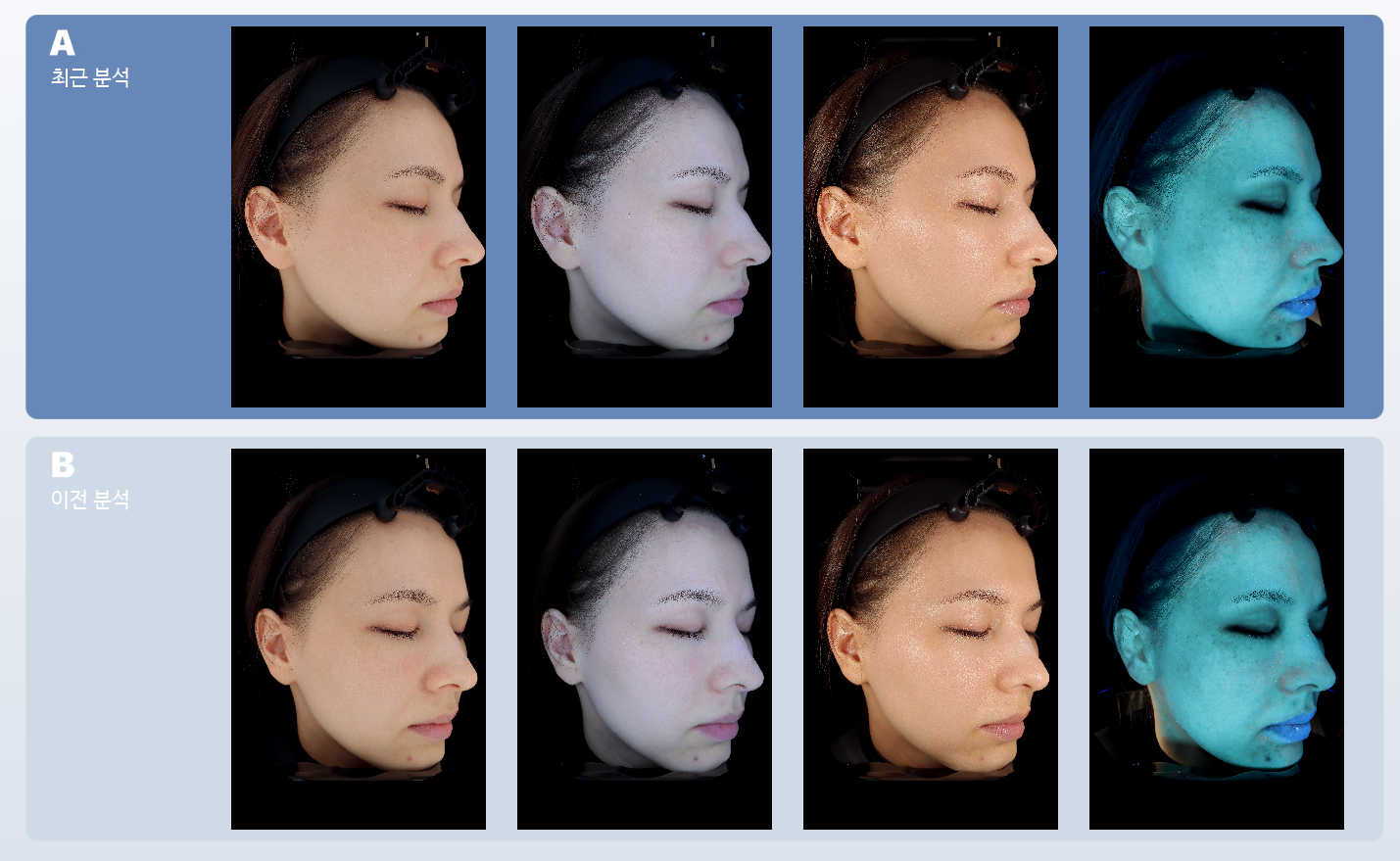
The software included with JANUS Pro provides elasticity analysis results.
The elasticity analysis uses images to assess patterns of connected pores on the cheek surface that occur as skin elasticity decreases. It looks at features such as the number and length of pore connections. The yellow lines in the example mark the connections detected in the image. More numerous and longer yellow lines can indicate lower elasticity. If elasticity improves, you may see a better result in the Elasticity section.
During standard photography, the chin rests on the chin rest. This may obscure part of the area beneath the chin where it touches the rest.
JANUS Pro was not designed to assess lifting results in the area beneath the chin that the rest obscures. If you need that area to be visible in the capture record, lift the chin slightly off the rest and keep the face still until the capture is complete.
Developing a 3D device for lifting and plastic surgery
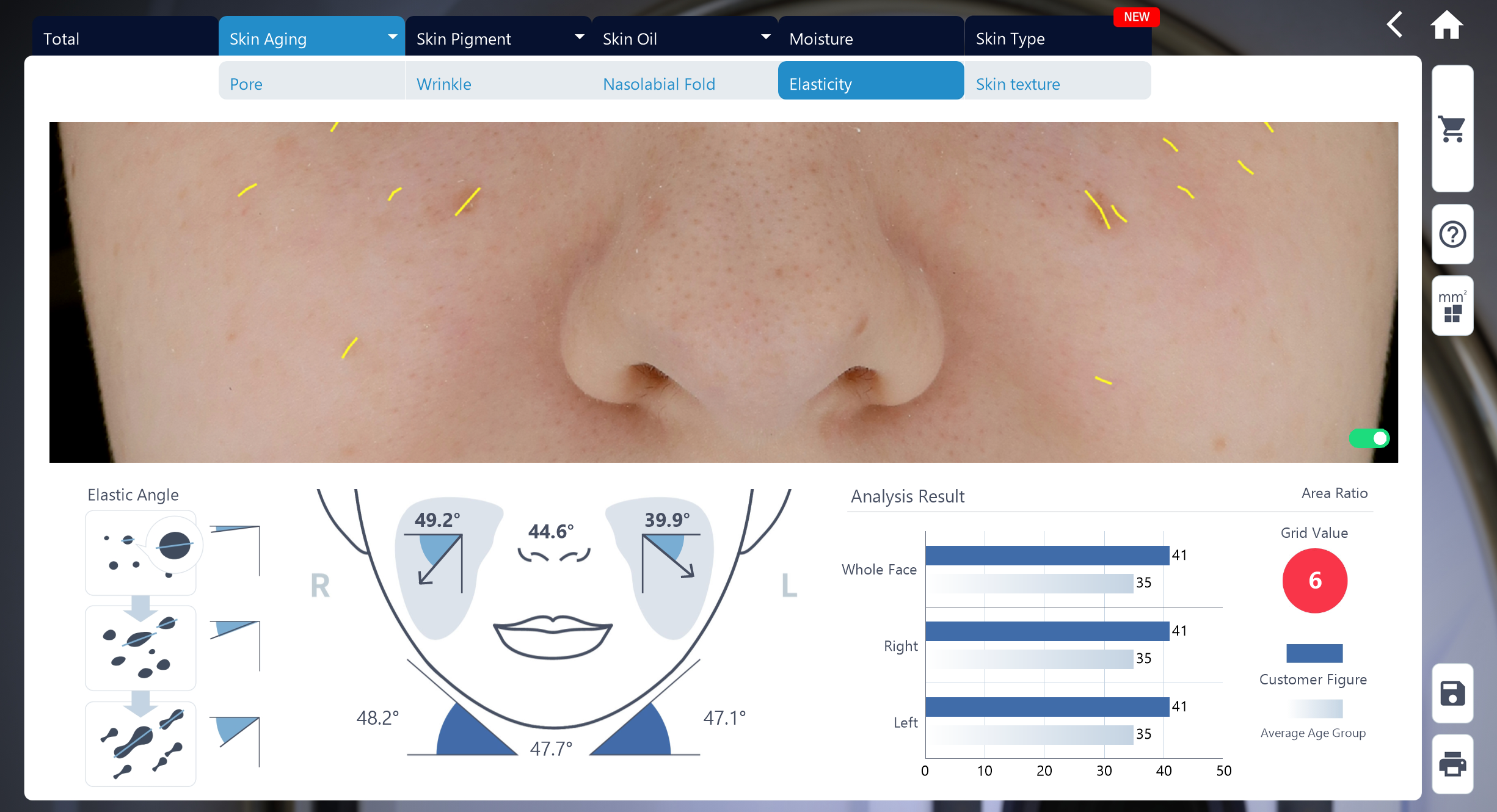
PIE Co., Ltd. is developing a separate new 3D skin analyzer.
The device uses 3D imaging to capture facial contours with precision and accuracy. It can be used for facial plastic surgery as well as lifting.
The device has yet to launch and is expected to launch in 2027. The prototype can currently be seen at trade shows and academic conferences.