


How to Use FOCUSKIN Skin Analysis for Product Recommendations and Follow-Up Consultations
After completing a skin analysis, a customer asks, “So, which products should I use?” Answering this question requires an explanation that connects the results on the screen with the products recommended in the store. Customers need to understand which concerns to address first, why certain products are worth considering, and how to use them at home.
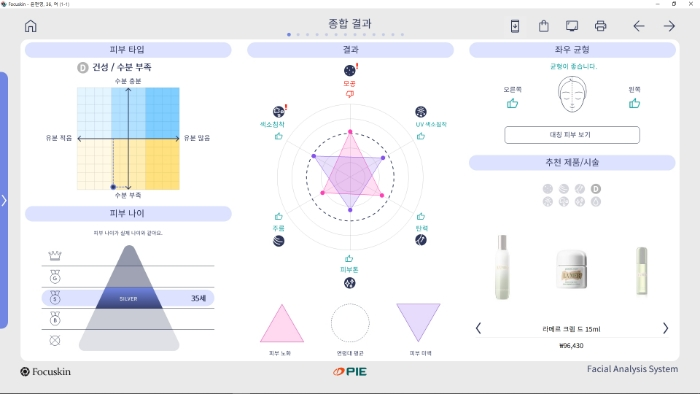
FOCUSKIN offers product recommendations based on skin analysis results, result sharing, records organized by capture date, and comparisons with previous results. Stores can use these features to extend a one-time skin analysis experience into an ongoing process of choosing products, using them, and returning for follow-up consultations.
Before explaining the analysis results, identify what the customer wants to address
Even when the results screen flags several areas of concern, the consultation should begin with the reason for the customer’s visit. Establish priorities by asking, “Which skin concern would you most like to discuss today?”
Then, review the results related to that concern together. This helps customers connect the issue they care about with the information on the screen.
For example, imagine a customer looking for moisturizing products because their skin feels dry. After explaining the analysis results, you can ask about the products they currently use and any discomfort or difficulties they have experienced.
Combining the analysis results with the customer’s experience makes the criteria for product recommendations more specific.

Explain why the products on the recommendation screen are worth considering
FOCUSKIN’s product recommendation feature can serve as a starting point for identifying products to consider during a consultation. Staff can then connect the customer’s concerns and preferences with each product’s verified purpose and usage instructions. Simply saying that a product appeared on the recommendation screen may not give the customer a sufficient reason to choose it.
During a consultation about moisturizing products, for example, you might say, “Let’s focus on moisturizing first. Since you mentioned that stickiness bothers you, this product offers a texture you may prefer.” If customers can try the textures in the store, ask them about the differences they notice.
It is helpful to narrow the recommendations to a number of products the customer can realistically choose from and use. You can also explain whether a product overlaps with something they already use and how to incorporate it into their existing routine. This makes the recommendation more specific, moving from “You also need this product” to “Here is why this product is worth your attention right now.”
Make the consultation something customers can revisit after leaving the store
You can use the result-sharing feature to help customers review at home what they discussed in the store.
FOCUSKIN allows customers to view their analysis results and recommended products via mobile or email, and to access their results on the web through a QR code. Before ending the consultation, make sure customers understand how to access their results.
McKinsey’s 2021 consumer research report on personalization also discusses post-purchase check-ins and usage guidance as touchpoints for maintaining customer relationships. Applied to in-store consultations, this can mean providing the information customers need to understand and use their products even after the purchase is complete.
At the next visit, ask how the previous recommendations worked in practice
During a follow-up consultation, reviewing previous records allows you to revisit the customer’s earlier concerns. Use FOCUSKIN’s date-based records and previous-result comparison features to review the same items together, while also asking how often the customer used the products, how they felt on the skin, and whether anything made continued use difficult.
If the photos or measurements have changed, explain the observed differences separately from the customer’s experience of using the products. Changes in analysis results alone cannot establish the effectiveness of the products sold. They can be used as reference material during a follow-up consultation to consider whether product choices or usage guidance should be adjusted.