


Why Do Dermatology Clinics Use Skin Analyzers Instead of Regular Cameras?
When visiting a dermatology clinic or aesthetic center, various methods are used to examine the condition of the skin.
A specialist may inspect the skin directly or take facial photographs with a standard camera. However, ordinary photography alone may not be enough to assess the skin systematically and continuously compare changes before and after treatment or care.
Why, then, do dermatology clinics and aesthetic centers use a skin analyzer instead of an ordinary camera?
And does having skin-analysis results mean that the condition of the skin can be determined from those results alone?
In short, a skin analyzer does not replace a physician or skin-care professional. It is an analytical tool that helps professionals examine and discuss the skin using more objective and consistent information.
Skin analysis is not completed by the device alone
What matters in skin analysis is not simply taking a photograph with a high-quality camera.
Three main processes are required to assess the skin more systematically.
① Capture the skin under consistent conditions
② Analyze the captured images
③ Have a physician or skin-care professional interpret the results comprehensively
All three must work together to produce meaningful results that can be used during a skin consultation.
Even for the same person, photographs can look different depending on the time of capture, lighting, camera position and distance, and facial angle.
Therefore, rather than merely taking one sharp photograph, it is important to record the skin under conditions that are as consistent as possible and make it possible to compare previous and current results.
What is the difference between an ordinary photograph and a skin analyzer?
A smartphone or standard camera can produce an image similar to what the skin looks like to the naked eye.
For skin-analysis purposes, however, this approach has several limitations.
Suppose a client is photographed by a window in natural light during the first visit, and under indoor lighting one month later.
Even if skin tone, redness, or pigmentation looks different in the two photographs, it may be difficult to determine whether the skin actually changed or the difference was caused by the shooting environment.
Each time a photograph is taken, the following may vary:
- Distance between the face and camera
- Camera height and angle
- Direction of the face
- Facial expression
- Position and brightness of the lighting
- Camera settings
As a result, many photographs may accumulate, yet accurate comparison can remain difficult because they were taken under different conditions.
A skin analyzer helps reduce these issues by using a capture environment suitable for skin analysis and multiple light sources to record the skin more systematically.
In other words, there is a difference between simply “taking a photograph with a better camera” and “obtaining data for skin analysis.”
It can reveal skin information that is difficult to identify in ordinary photographs
Direct visual examination of the skin is extremely important.
In particular, a physician directly examines the skin and determines the direction of consultation by considering the client’s concerns, lifestyle, and history of previous treatments and care.
However, it is not easy to record and compare every skin condition according to the same criteria through visual examination alone.
A skin analyzer uses not only standard photography but also multiple light sources so that the skin can be examined from different perspectives.
For example, JANUS uses Normal, Polarized, and UV imaging conditions to help visualize and analyze skin characteristics that can be difficult to identify in ordinary photographs.
This allows various skin conditions to be recorded as images and data and compared with subsequent changes.
There is, however, an important point to remember.
A skin-analysis result is not the professional’s final judgment.
The analyzer provides objective images and data; a physician or skin-care professional makes the final assessment of the skin and determines the direction of the consultation based on that information.
In other words,
skin-analysis device + analytical data + professional judgment
work together to increase the practical value of skin analysis.
In skin analysis, recording change matters more than a single measurement
If you plan to visit a dermatology clinic or aesthetic center regularly rather than receive a single treatment, it is important to consider not only where you receive care but also how your skin condition is recorded and compared.
For example, suppose you receive skin care once a month.
Your skin is assessed at the first visit, and after the treatment it is measured again one month later.
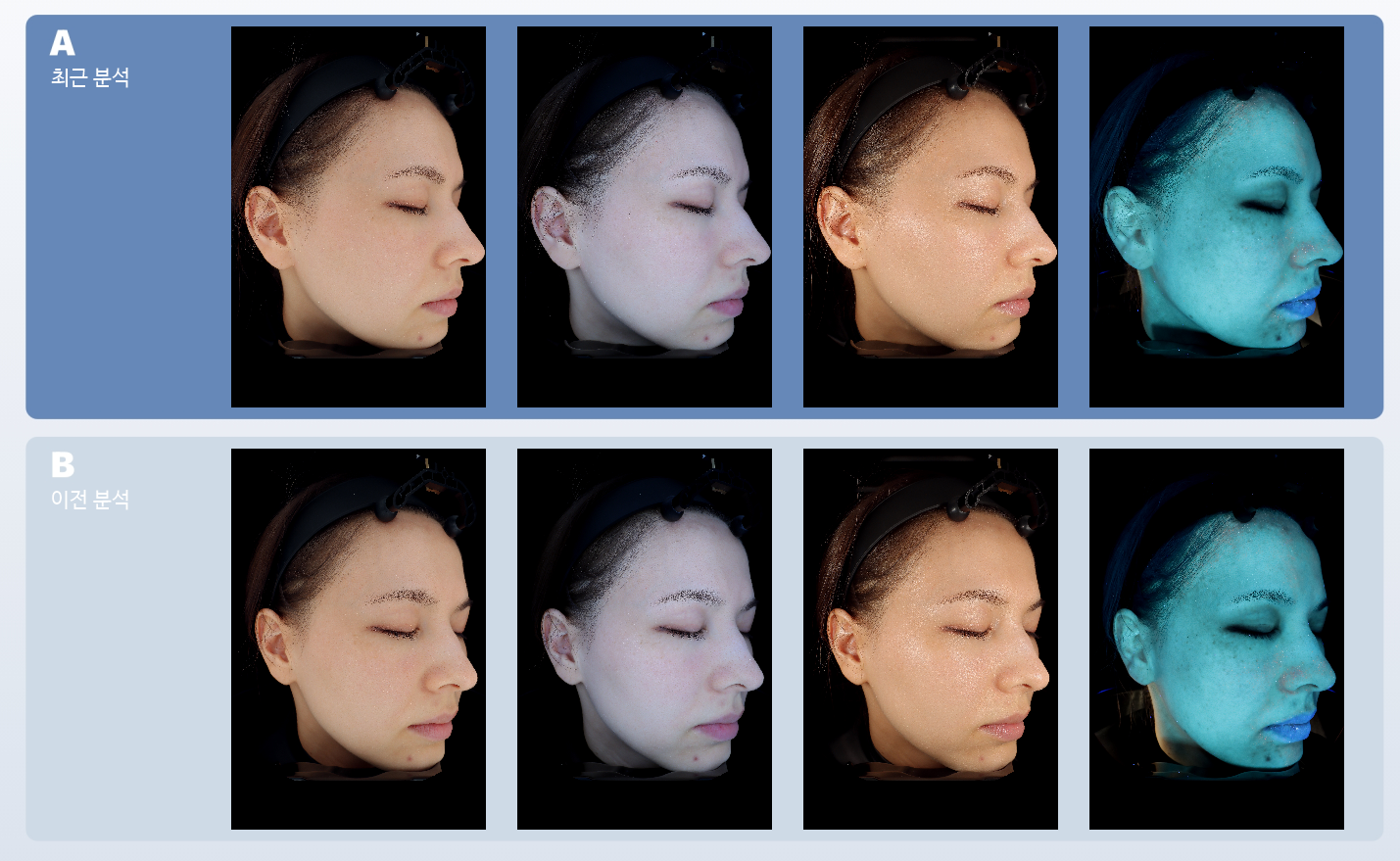
▲ JANUS Pro function for comparing recent and previous photographs
If care continues for three or six months, it becomes important to check how the skin has changed over that period.
With ordinary photographs, past and current images must be located and compared manually.
If each image was captured under different conditions, it may also be difficult to tell whether a difference represents a real change in the skin or merely a difference in photography.
By contrast, a facility that owns a skin analyzer and continuously manages each client’s skin data can compare previous and current measurements and track changes more systematically.
For example,
First visit
→ Measure and record the skin condition
After 1 month
→ Compare with previous data
After 3 months
→ Identify improvements and areas requiring continued care
After 6 months
→ Track long-term skin changes
This is one way to monitor changes in the skin over time.
When data is accumulated continuously, it becomes possible to use past images and analytical data to identify improvements and areas that require ongoing care, rather than relying only on the subjective impression that “the skin seems to have improved.”
Therefore, if you plan to receive ongoing skin care, it is useful to ask not only what treatment or care will be provided but also:
“Can this facility continuously measure my skin and compare the results with my past data?”
It is also important to compare skin-analysis data at the same location each time
There is another important issue.
Simply comparing a past photograph with a current one does not always guarantee an accurate comparison.
This is because the position and angle of the face can change slightly with each capture.
For example, suppose the face is turned slightly to the left during the first visit but is nearly straight ahead one month later.
If the two photographs are simply placed side by side, accurately comparing the same area of the skin may be difficult.
When assessing changes in pores, pigmentation, or wrinkles in a particular area, it is especially important to compare the same region in the previous and current images.
Tracking skin changes with JANUS Pro’s AI features
JANUS uses AI-based facial recognition technology to detect key facial landmarks and provides a function that automatically adjusts image position and angle to facilitate comparison between previous and current results.
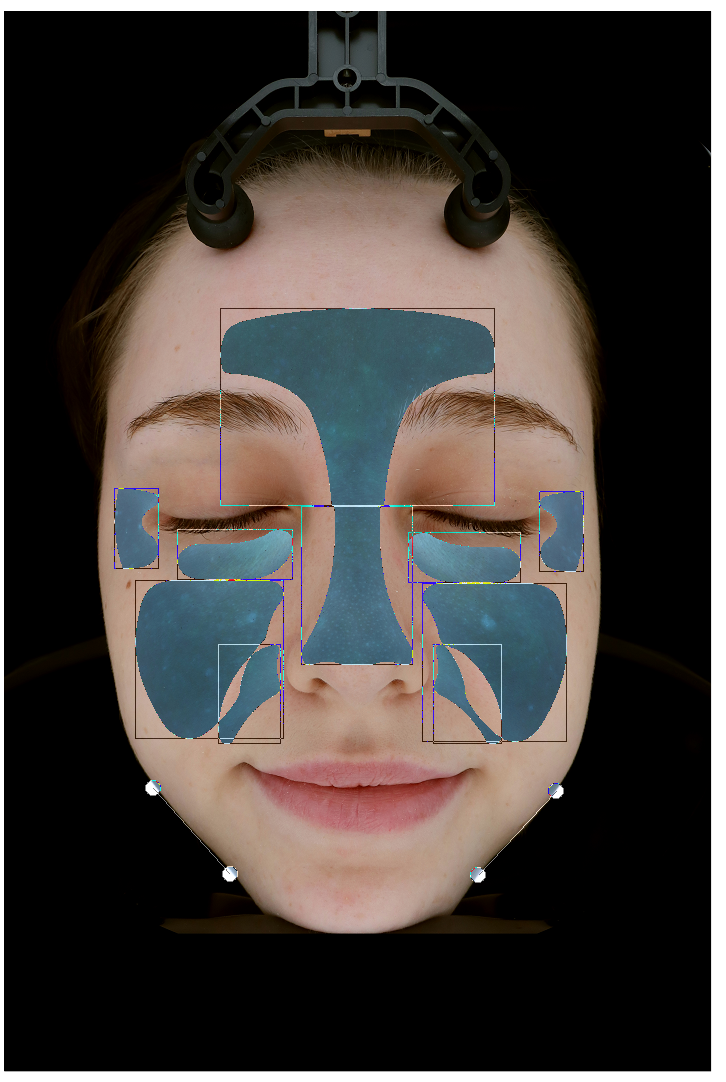
This helps reduce differences in facial position and angle between captures and makes it easier to compare the same region analyzed in the previous and current images.
It goes beyond simply asking,
“How is the previous photograph different from the current photograph?”
It helps answer:
“How has the same skin region analyzed previously changed now?”
For example, suppose pigmentation is observed in a particular area of the right cheek during the first measurement.
If the face is positioned or angled differently in a later image taken after skin care, the matching location must be found manually in an ordinary photograph.
By aligning images and matching analysis areas based on key facial landmarks, however, the same region can be compared more easily between the previous and current measurements.
Accordingly, the value of this function can increase as data is accumulated over longer periods, such as:
First visit → after 1 month → after 3 months → after 6 months
Without skin-analysis software, managing client data is more complicated than it may seem
Another reason for using a skin analyzer is the convenience of continuously managing client data.
Suppose a facility serves 20 clients per day and takes photographs for each client at the first visit, after two weeks, after one month, and after three months.
When managed as ordinary image files, multiple images accumulate even for a single client.
For example:
HongGildong_initial.jpg
HongGildong_2weeks.jpg
HongGildong_1month.jpg
HongGildong_3months.jpg
If front, left, and right views are captured each time, the number of files increases further.
As the number of clients grows, separate folders may be required, such as:
2026 New Clients → Hong Gildong → Initial Visit → Front
2026 New Clients → Hong Gildong → Initial Visit → Left
2026 New Clients → Hong Gildong → Initial Visit → Right
When the client returns, staff must locate the correct past photograph for comparison and manually find before-and-after images.
A greater problem is that the capture conditions may differ between photographs.
Even when the image files remain, differences in the shooting environment or facial position may make it difficult to determine whether an observed difference is an actual skin change or a result of the capture conditions.
For this reason, dermatology clinics and aesthetic centers serving long-term clients place great importance on managing captured client data.
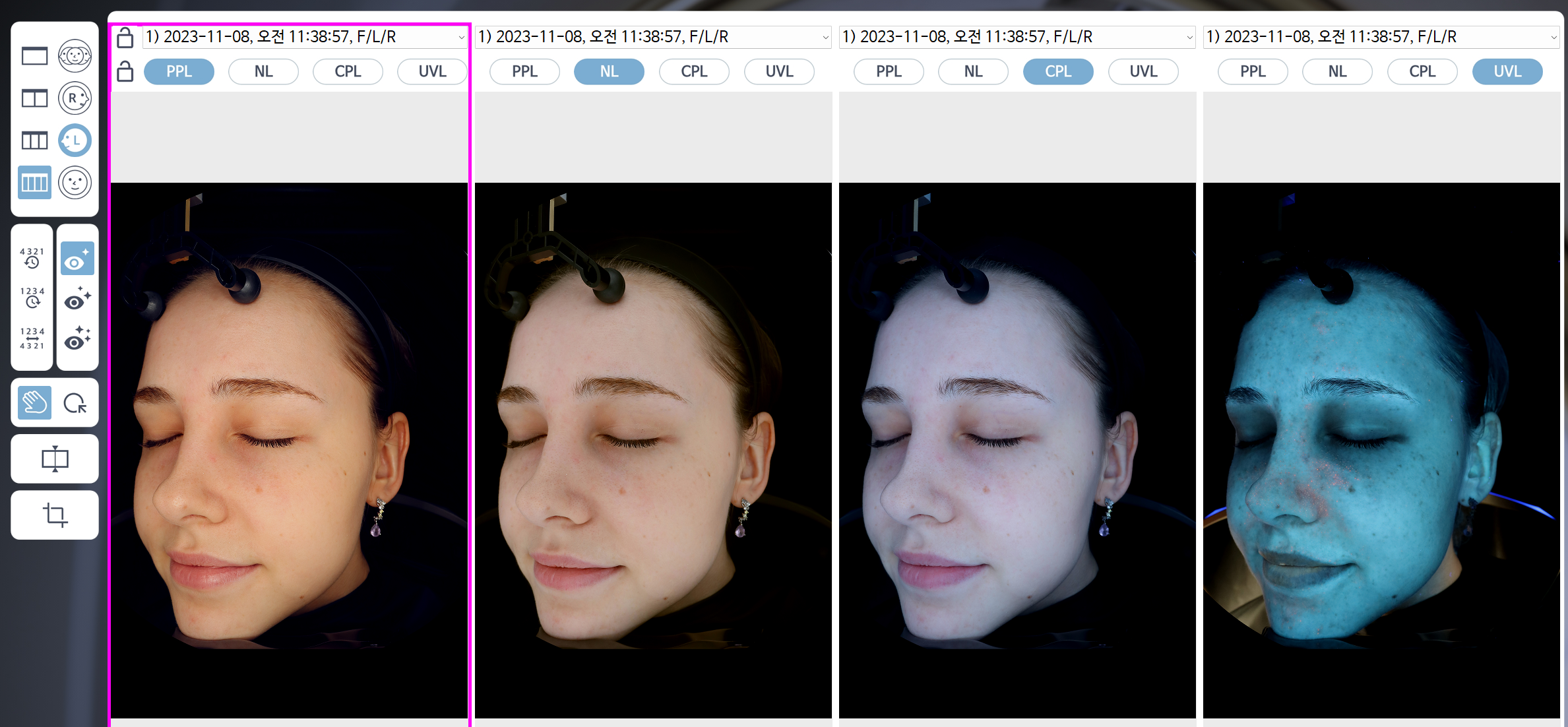
▲ Left-side image using the JANUS Pro software
Skin-analysis software turns “photo storage” into “skin-data management”
The role of skin-analysis software is not limited to storing photographs.
One of its key functions is to systematically manage each client’s skin data and enable comparison between past and current results.
If a client’s skin was captured with JANUS and the analysis results were saved at the first visit, the previous data can be retrieved and compared with the current condition when the client returns.
Initial consultation → treatment → return visit → remeasurement → review of changes
This entire process becomes one connected workflow.
The data can also be used during consultations.
Instead of simply saying,
“Your skin has improved since your last visit,”
the professional can say,
“Let’s compare your skin at the first visit with its current condition,”
and show the actual images and analysis results together.
This can also help clients understand changes in their own skin more intuitively.
Ultimately, the value of a skin analyzer does not lie in a single photograph
A skin analyzer is used not simply because it takes better photographs than an ordinary camera.
It records the skin under consistent conditions,
examines the skin using multiple light sources,
uses AI to adjust images for easier comparison with previous captures,
continuously accumulates data for each client,
and enables comparison of past and current skin changes.
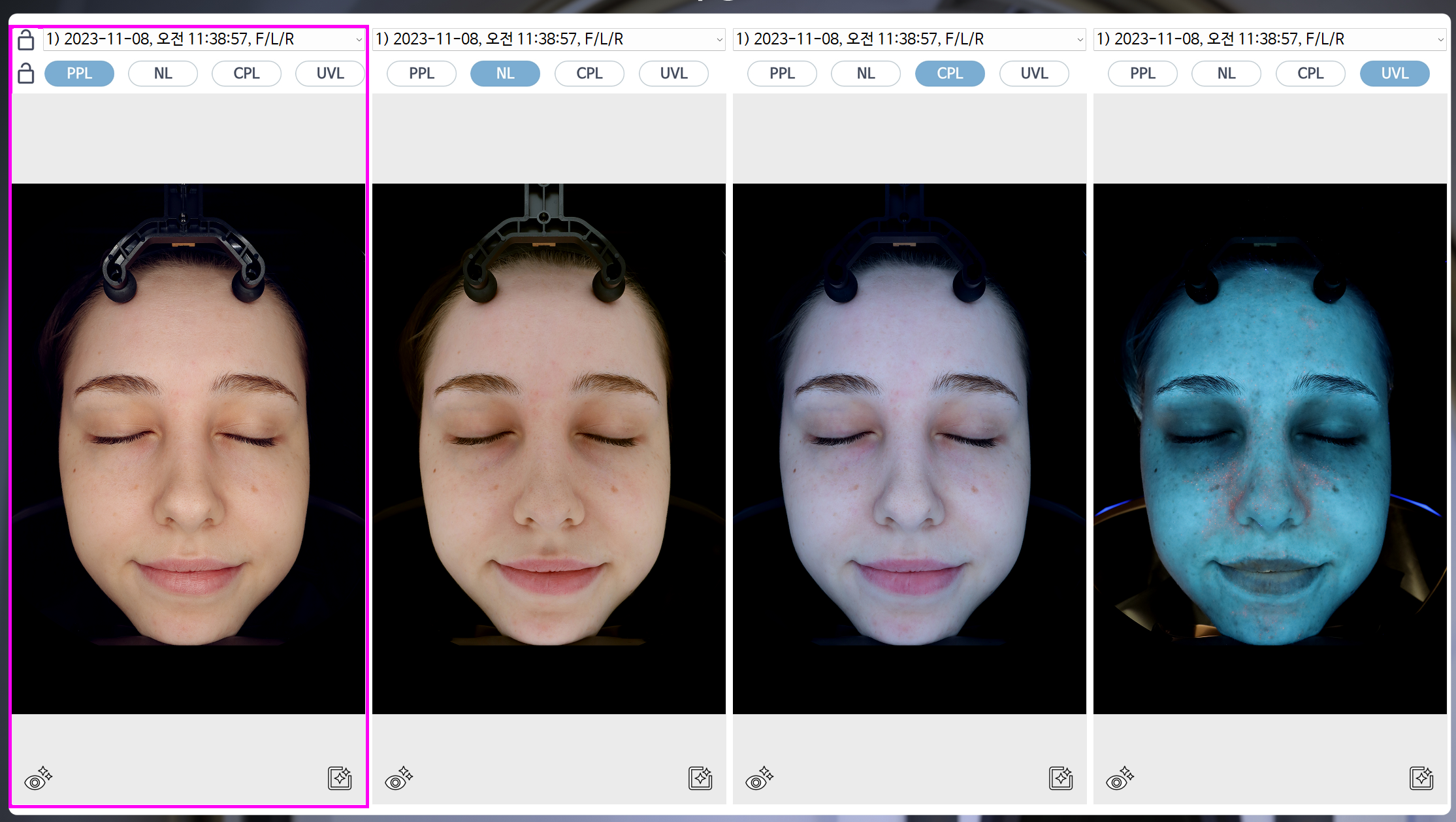
A physician or skin-care professional ultimately interprets this data and applies it to the consultation and care plan.
Therefore, a skin analyzer does not replace the professional; it supports the professional in examining the client’s skin more systematically and conducting a more informed consultation.
For long-term skin care in particular, an environment in which the skin can be measured consistently and past and current data can be compared may be more important than a single analysis result.
When choosing where to receive skin care, it is useful to consider not only the treatments or programs offered but also whether the facility can:
“Continuously record and track the skin condition?”
“Compare previous data with current data?”
“Use skin-analysis results as part of a professional consultation?”
Ultimately, the core of skin analysis is not a single photograph, but recording and comparing how the skin changes over time.
JANUS Pro is a skin-analysis solution designed to support this systematic approach to skin analysis and data-based follow-up management.