


JANUS Pro Skin Analyzer for Dermatology Clinics: How to Use Skin Analysis Results for Treatment Consultations
When consulting a patient about a skin procedure, the patient’s concerns do not always match the skin condition observed by the medical professional.
A patient may say that their skin looks dull, while redness or uneven skin tone may actually be more prominent than pigmentation. Even when enlarged pores are the main concern, the appropriate management approach may differ depending on whether excess sebum is the primary cause or whether reduced elasticity and skin aging are also present.
JANUS Pro photographs the face using normal light, cross-polarized light, parallel-polarized light, and 385 nm UV light. It visualizes and analyzes various skin characteristics, including pores, wrinkles, elasticity, skin texture, pigmentation, redness, sebum, and porphyrins.
Medical professionals can review these results together with the patient’s medical history, visual examination, skin type, and previous treatment experience as references during consultation.
JANUS Pro results are not intended to diagnose a disease or automatically determine a specific procedure. They are image-analysis data designed to support medical examination and treatment planning and to compare changes before and after treatment under consistent conditions.
Identify the priorities among skin concerns with a single capture
JANUS Pro shows not only a score for each analysis item but also where the relevant characteristics are concentrated on the face.
For example, even if the overall pore score is poor, the possible causes can be considered in greater detail:
- High levels of both sebum and porphyrins, mainly in the T-zone
- Large pores observed mainly on both cheeks
- Pore-connection lines accompanied by reduced skin-texture quality
- Dehydration observed together with fine lines
Reviewing several analysis results together helps distinguish between the concern the patient wants to improve first and the items that the medical professional should prioritize.
What information can be considered for each analysis result?
Pores: Review sebum, porphyrins, elasticity, and skin texture together
— fractional laser, microneedle RF, sebum control, and exfoliation management
Wrinkles: Review wrinkle location, elasticity, and hydration together; facial-expression changes should be observed directly by the medical professional
— botulinum toxin, fillers, and laser- or RF-based collagen remodeling
Elasticity: Analyze pore connectivity; actual skin sagging and facial volume should be assessed directly by the medical professional
— RF, ultrasound lifting, collagen remodeling, and volume restoration
Skin texture: Review fine lines, pores, and hydration together
— fractional laser, microneedling, peeling, and skin-barrier care
Pigmentation: Compare polarized-light and UV analysis results; the form and type of pigmentation should be assessed directly by the medical professional
— laser, IPL, peeling, or topical management according to pigment type
Redness: Analyze the distribution of redness by area; vascular and inflammatory lesions should be observed directly by the medical professional
— vascular laser, IPL, inflammation control, and skin-barrier care
Sebum and porphyrins: Analyze their distribution by facial area; comedones and inflammatory lesions should be observed directly by the medical professional
— acne treatment, sebum and keratin control, and consideration of photodynamic therapy when necessary
Skin tone: Review pigmentation, redness, and regional differences in brightness together
— management of pigmentation, redness, and skin-tone evenness according to the cause
Hydration: Review skin texture and wrinkles together; sensitivity and skin-barrier condition should be assessed directly by the medical professional
— prioritize moisturization and skin-barrier recovery and adjust whether a procedure should be performed
※ The procedures and management methods above are general examples for consultation. The actual procedure should be determined after a medical professional comprehensively reviews the patient’s skin condition, medical history, and skin type.
※ The procedures listed above are examples of available categories. A medical professional should determine whether to apply them and select the device type, wavelength, energy, and treatment interval after reviewing skin disease, skin color, medication use, and previous treatment history.
1. Pore results: A reference for distinguishing sebum-related pores from pores associated with reduced elasticity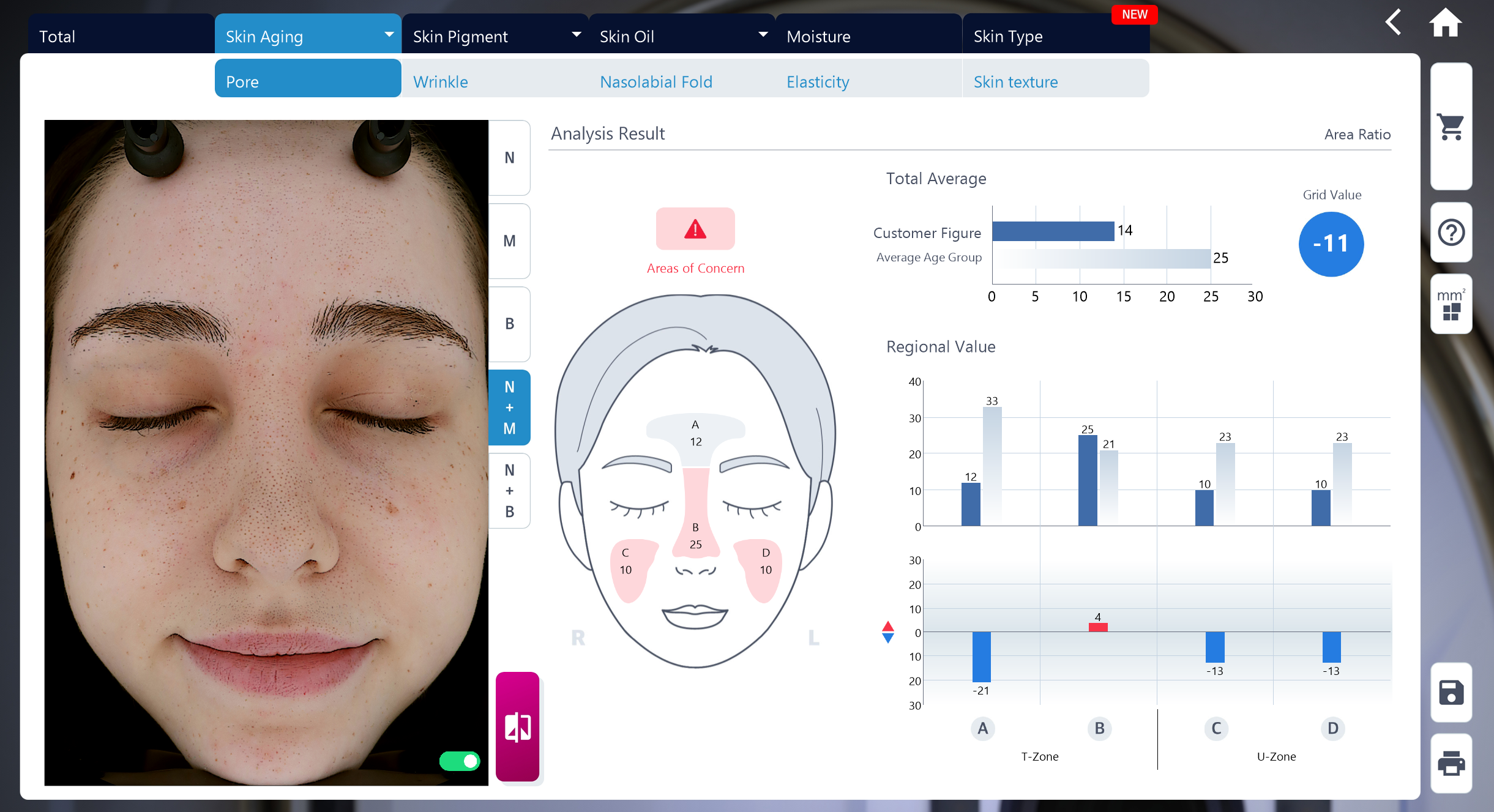
JANUS Pro’s pore analysis displays pore area, count, size, and distribution by facial region.
It is not appropriate to apply the same procedure to every patient simply because large pores are observed.
When both sebum and porphyrins are abundant
If large amounts of sebum and porphyrins are observed mainly in the T-zone, it is necessary to check whether increased sebum secretion, keratin buildup, comedones, or inflammatory lesions are also present.
Depending on the skin condition, the medical professional may consider:
- Sebum and keratin-control treatment
- Treatment of acne and comedones
- Pore cleansing and skincare management
- Microneedle RF
When large cheek pores occur together with reduced elasticity
If many large pores are present on the cheeks and pore connectivity is also prominent in the elasticity analysis, skin aging and reduced dermal support should be evaluated in addition to sebum.
In such cases, fractional laser or RF-based procedures intended for collagen remodeling may be considered.
Clinical studies have also evaluated fractional lasers and needle RF as procedures for improving pores and skin texture.
2. Wrinkle results: Review both the location and cause of wrinkles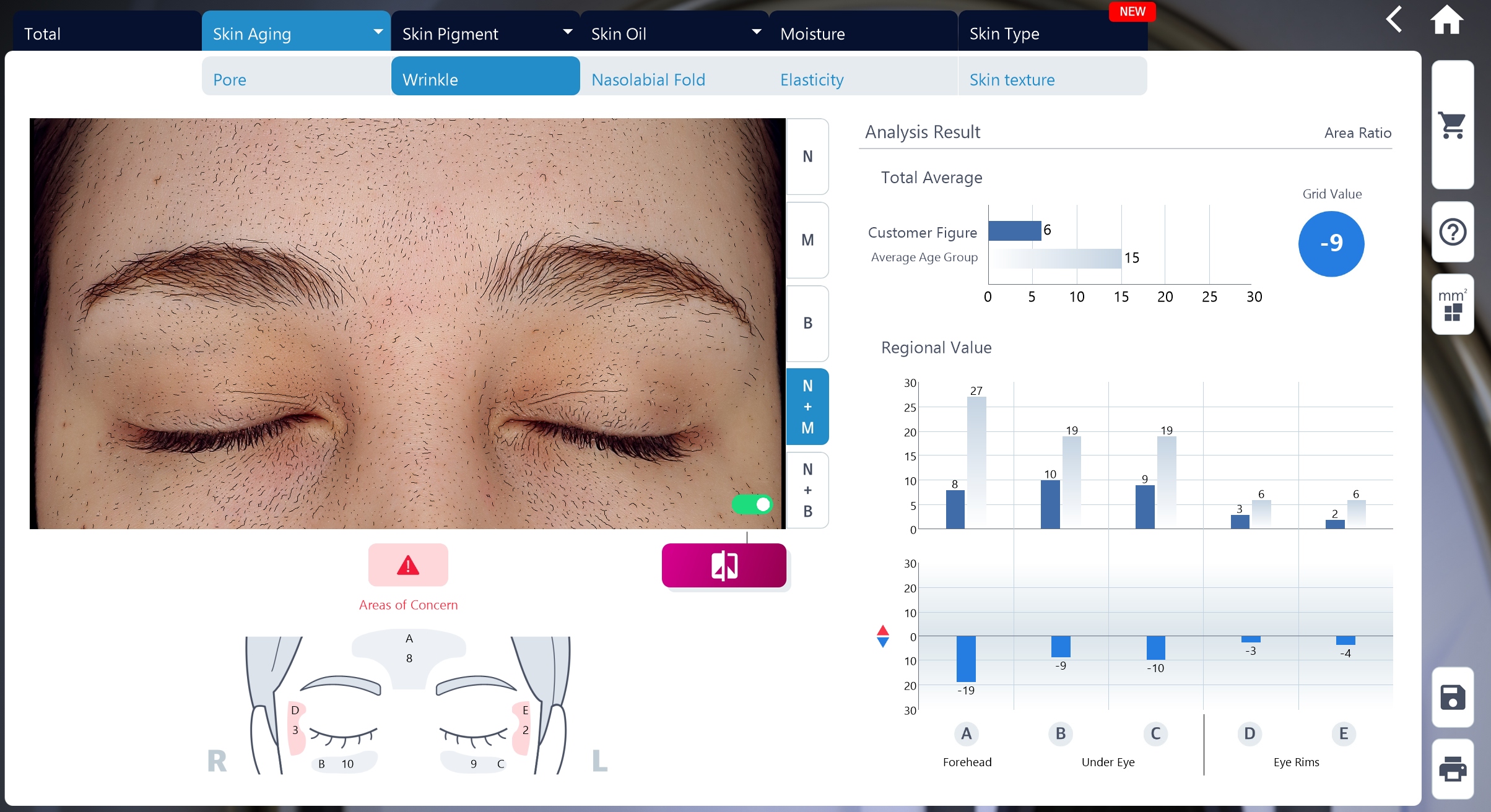
JANUS Pro uses parallel-polarized images to observe wrinkles and skin contours on areas such as the forehead, around and beneath the eyes, and the nasolabial folds.
After reviewing the analysis results, the medical professional should determine the type of wrinkle.
Wrinkles that become prominent with facial expressions
Botulinum toxin treatment may be considered for dynamic wrinkles associated with muscle movement, such as those on the forehead, between the eyebrows, and around the eyes.
Fine lines that remain even without facial expression
Depending on the skin condition, the following treatments may be considered for fine lines associated with photoaging, dehydration, or reduced skin thickness:
- Fractional laser
- RF or microneedle RF
- Skin boosters and regenerative skin treatments
- Moisturization and skin-barrier care
Wrinkles deepened by volume loss
Wrinkles accompanied by nasolabial folds or hollowing require an evaluation of facial volume and structure rather than treatment of the skin surface alone. Volume-restoring procedures such as fillers may be considered when needed.
The American Academy of Dermatology also presents botulinum toxin and fillers among wrinkle-treatment options, while explaining that the appropriate treatment may vary according to the cause of the wrinkles and facial structure.
3. Elasticity results: JANUS Pro does not measure elasticity by physically pulling the skin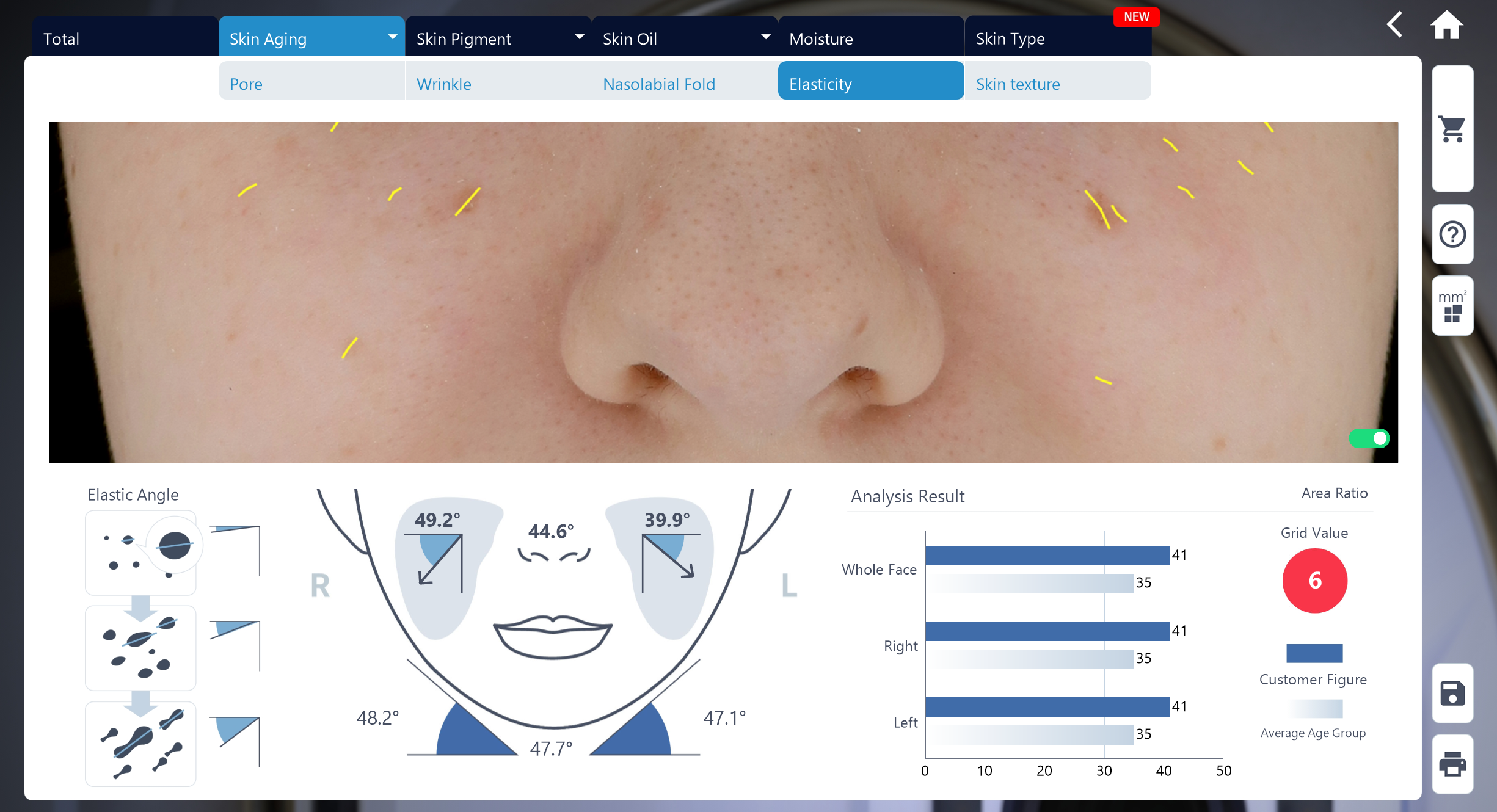
JANUS Pro’s elasticity analysis does not measure recovery by suctioning or physically pulling the skin.
As skin aging progresses, pores on the cheeks may change from a round to an oval shape, and some pores may connect and appear as fine lines. JANUS Pro analyzes the number and length of these pore connections in the image.
If the elasticity result is poor, the medical professional may additionally review:
- The actual degree of skin sagging
- Loss of facial fat and volume
- Skin thickness and photoaging
- Wrinkles and pore connectivity
- The scope of improvement desired by the patient
Depending on the skin condition, RF, focused ultrasound, collagen-remodeling procedures, or volume-restoring procedures may be considered.
The “angle” displayed on the analysis screen does not mean that a lower value always indicates better elasticity. Because the starting direction of the pore-connection lines differs from person to person, this value is more appropriately used as supporting information for observing directional changes in repeated captures of the same patient rather than as an absolute measure of elasticity. Changes in the angle may be used to infer a possible reduction in elasticity.
4. Skin-texture results: Observe surface roughness and fine contours
Example of good skin texture:
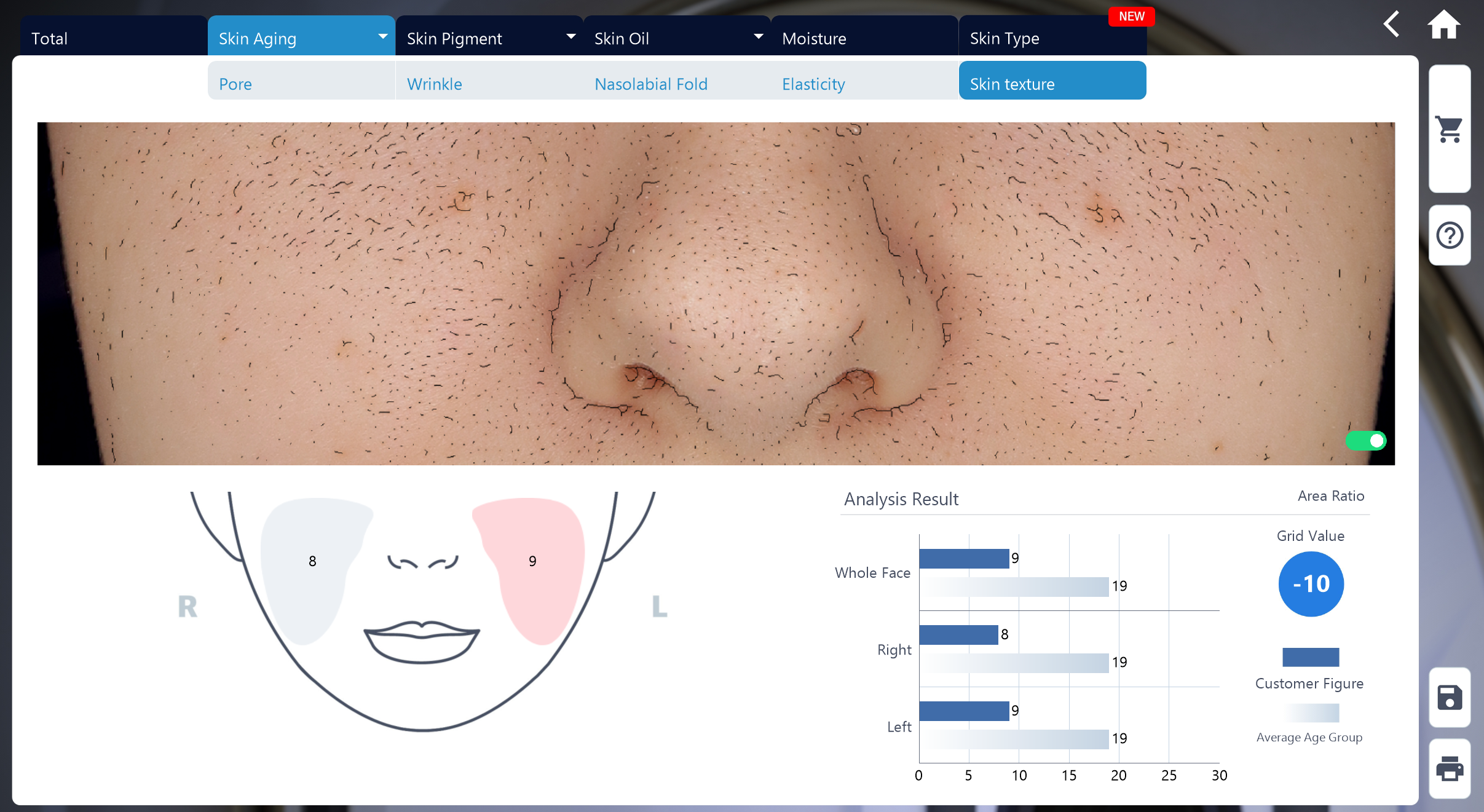
Examples of skin-texture differences according to aging, sex, and skin condition:
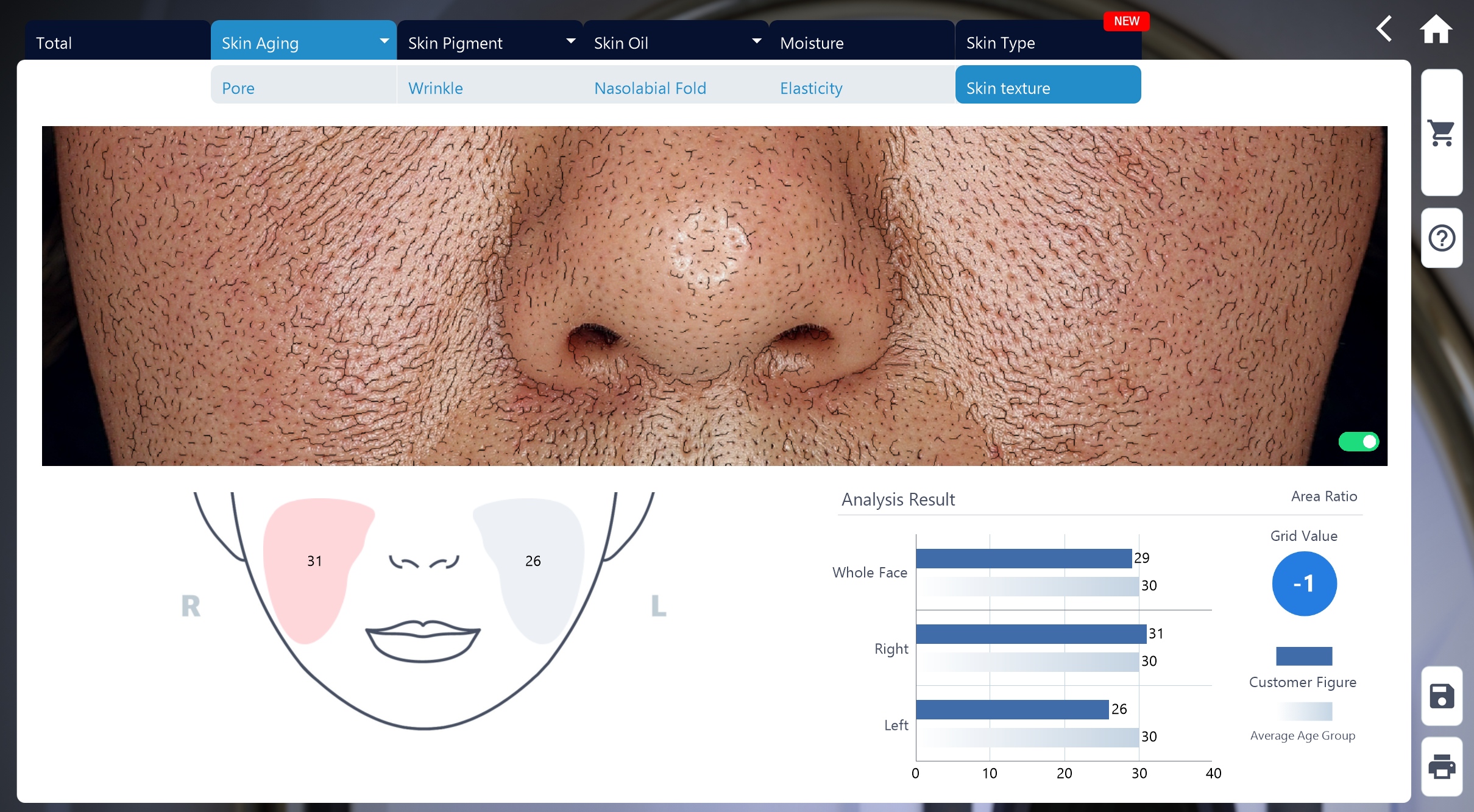
Skin-texture analysis uses parallel-polarized images reflected from the uppermost surface of the epidermis to assess fine surface contours and the degree of line connectivity.
Rough skin texture may have various causes:
- Keratin buildup
- Dehydration
- Enlarged pores
- Fine lines
- Acne scars
- Recurrent inflammation
- Photoaging
Rather than selecting a procedure from the skin-texture result alone, the medical professional should also review pores, wrinkles, hydration, and inflammation.
Depending on the skin condition, fractional laser, microneedling, RF, peeling, skin-barrier recovery, or skin hydration may be considered.
If the skin barrier is weak or active inflammation is present, it may be necessary to control the inflammation and restore the barrier before performing an intensive procedure.
5. Polarized-light and UV pigmentation: These analyses do not diagnose pigment type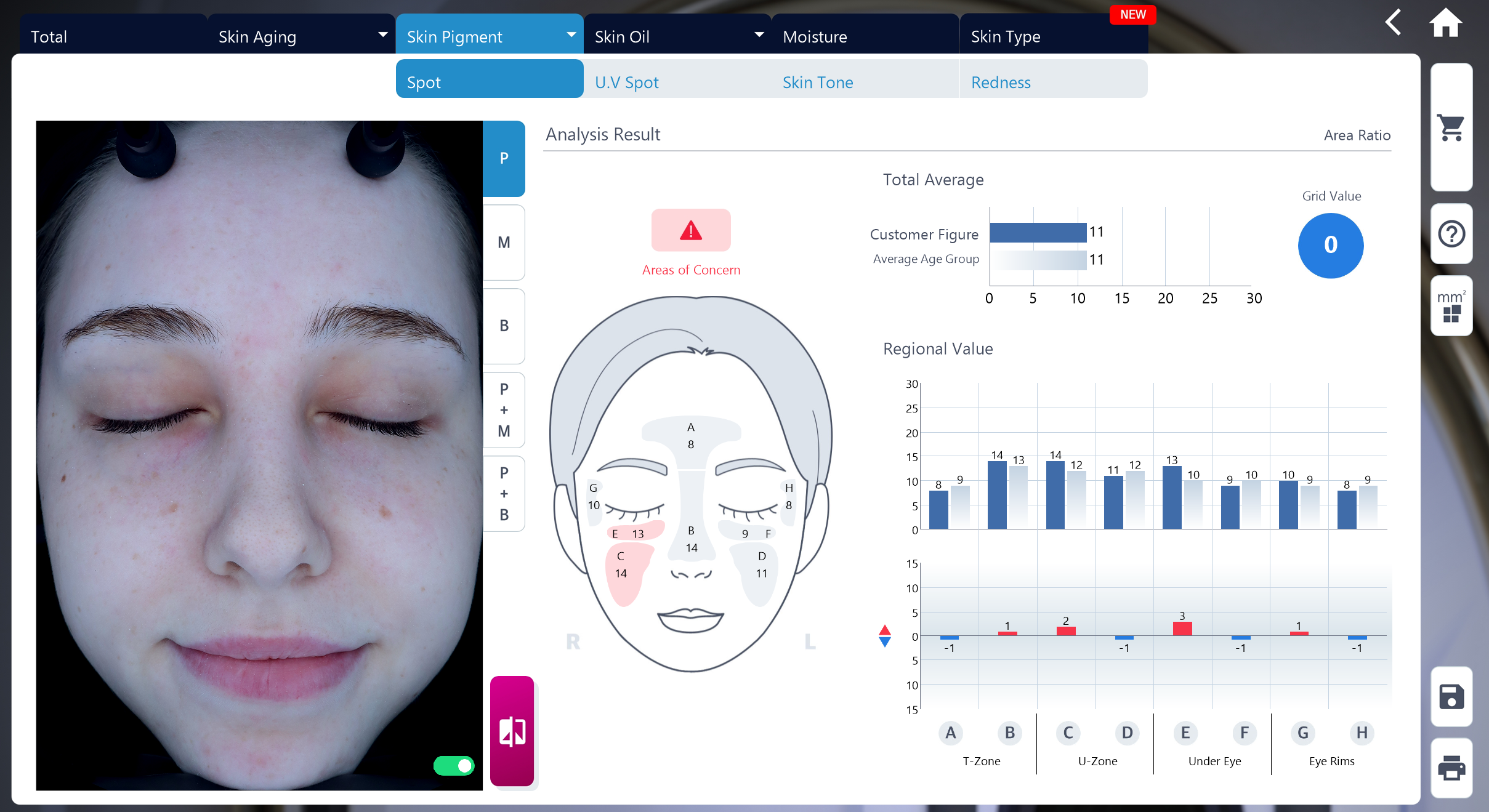
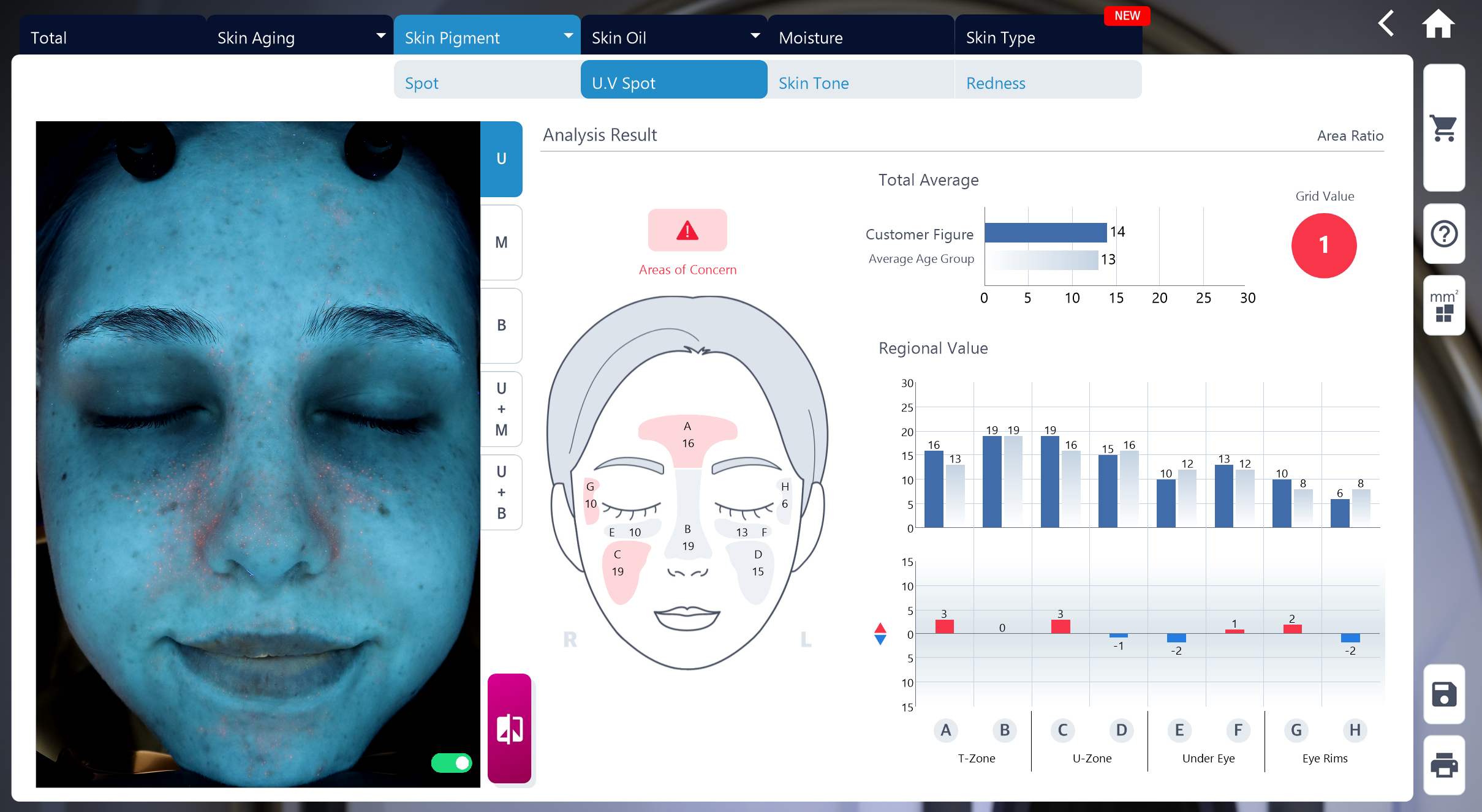
Cross-polarized images make the distribution of brown pigmentation and redness clearer through scattered light from within the skin.
UV images may emphasize pigmentation-related contrast and distribution that are relatively indistinct in normal-light or polarized images.
Comparing the two results supports consultation about:
- Where currently visible pigmentation is concentrated
- Whether additional areas are emphasized in the UV image
- How the detected area and brightness have changed before and after treatment
Before treatment, the medical professional should differentiate among pigment types such as solar lentigines, freckles, melasma, post-inflammatory hyperpigmentation, and nevi. The laser wavelength, irradiation method, and energy vary according to pigment type and skin color. An inappropriate approach may worsen pigmentation or cause post-inflammatory hyperpigmentation.
JANUS Pro should therefore be used to identify pigment location and distribution and to compare progress, while the final treatment plan should be established through a medical professional’s diagnosis.
6. Redness results: Identify the location and distribution of redness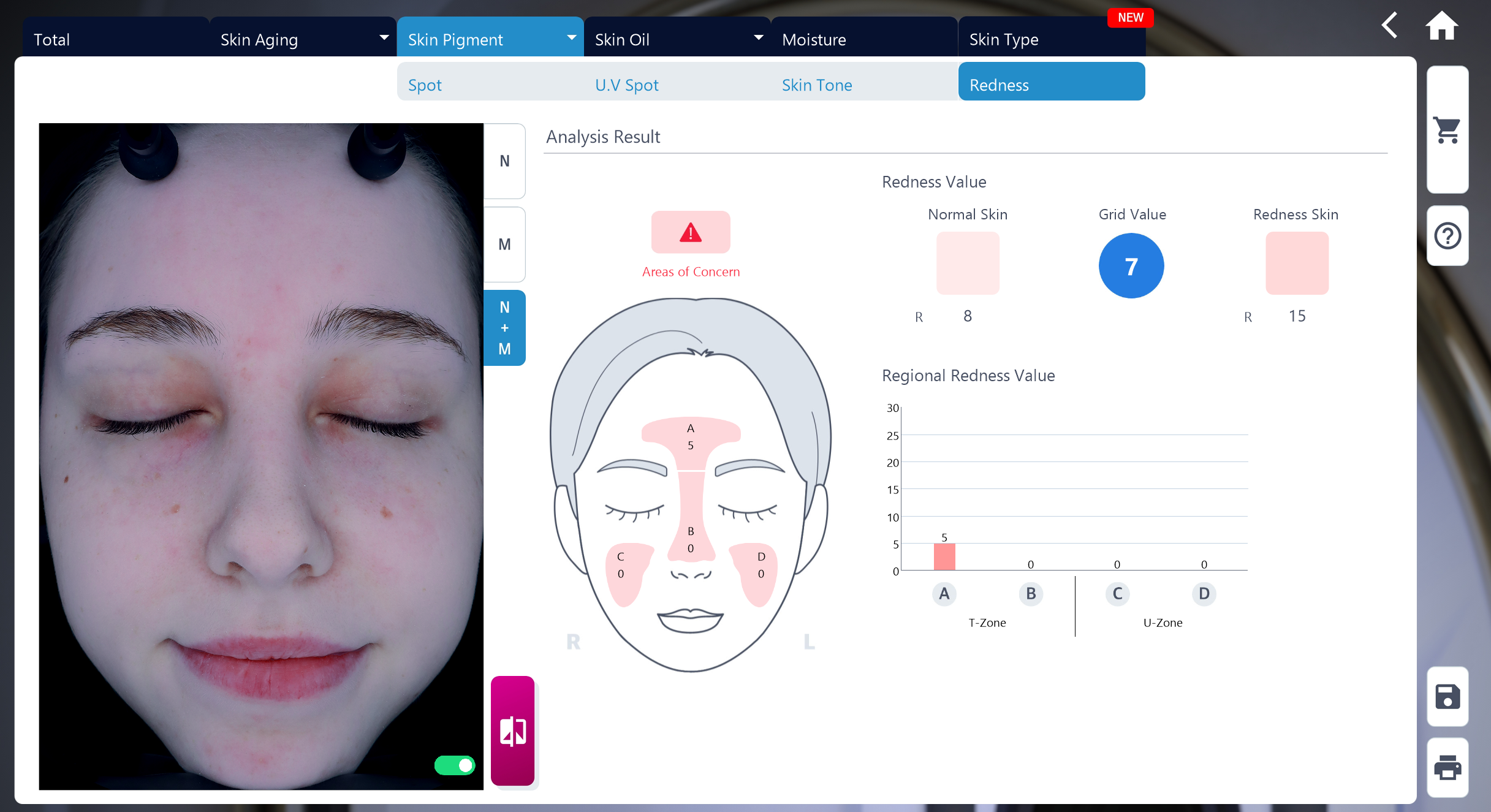
Redness analysis extracts red tones from the image and shows their facial distribution based on the color difference between the predominant skin-tone region and the red regions.
If a high level of redness is detected, the medical professional should distinguish among the following possible causes:
- Temporary changes in temperature or exercise
- Acne and post-inflammatory erythema
- Rosacea
- Dilated capillaries
- Irritant or contact dermatitis
- Temporary skin reactions following a procedure
Vascular lasers or IPL may be considered for redness associated with vascular dilation. If active dermatitis or acne inflammation is the cause, however, inflammation treatment and skin-barrier recovery may take priority.
7. Sebum and porphyrin results: UV-image indicators, not acne diagnostic values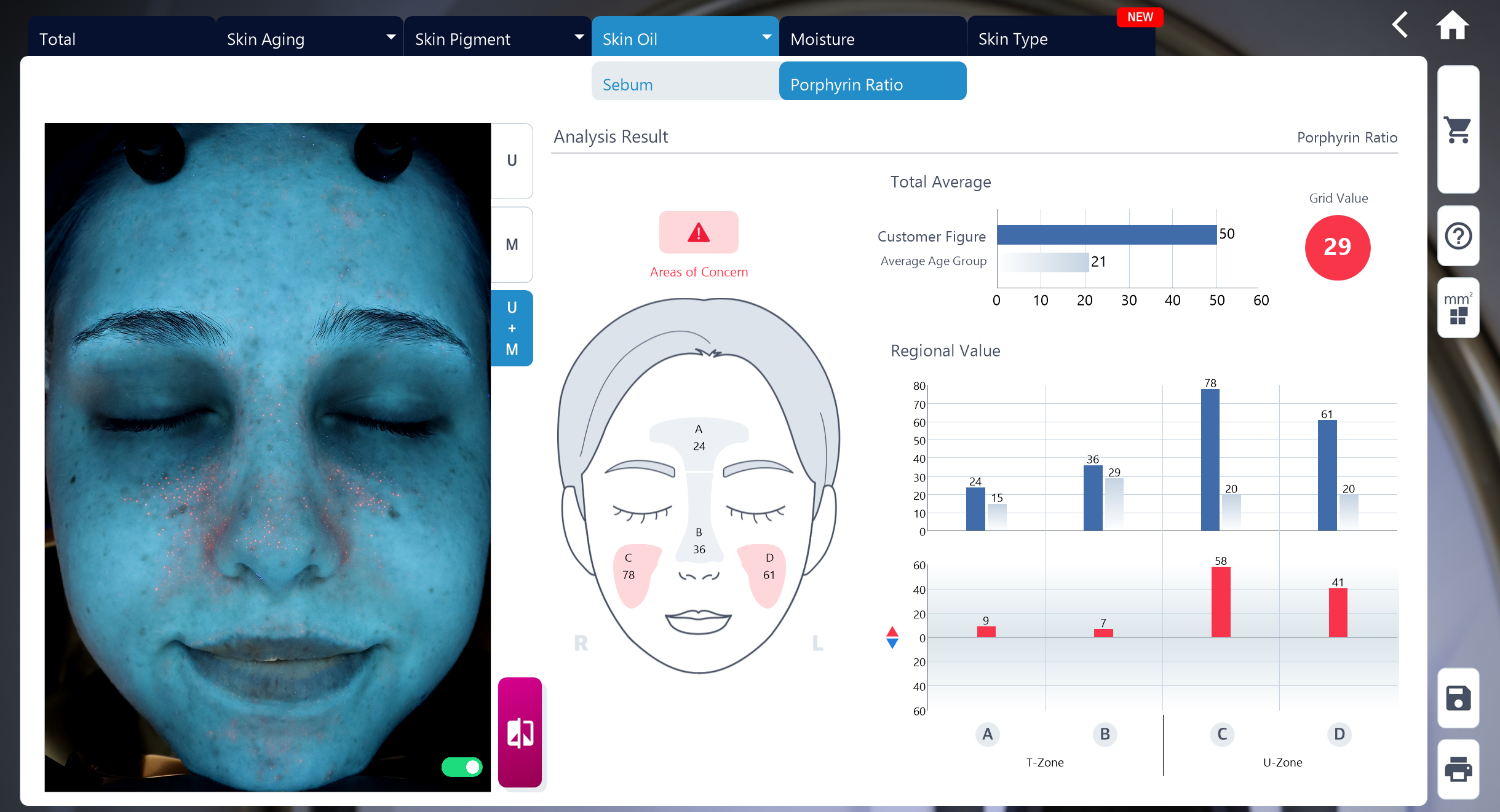
Under UV light, fluorescence associated with ordinary sebum and porphyrins may appear in different colors. JANUS Pro uses these differences to analyze the counts of sebum and porphyrins and their distribution across the T-zone and U-zone.
If a large amount of porphyrin is detected, the result may be reviewed together with comedones, inflammatory lesions, and skin oiliness. Porphyrin levels alone, however, should not be used to diagnose the presence or severity of acne.
In particular, the porphyrin ratio may appear relatively high when the total sebum count is low. The following results should therefore be reviewed together:
- Total sebum count
- Porphyrin count
- Distribution across the T-zone and U-zone
- Comedones and inflammatory lesions
- Whether the face was cleansed and whether makeup is present
Based on the actual skin condition, the medical professional may determine the need for topical medication, oral medication, sebum and keratin management, extraction, laser treatment, or photodynamic therapy.
8. Skin-tone results: This is not a simple assessment of light versus dark skin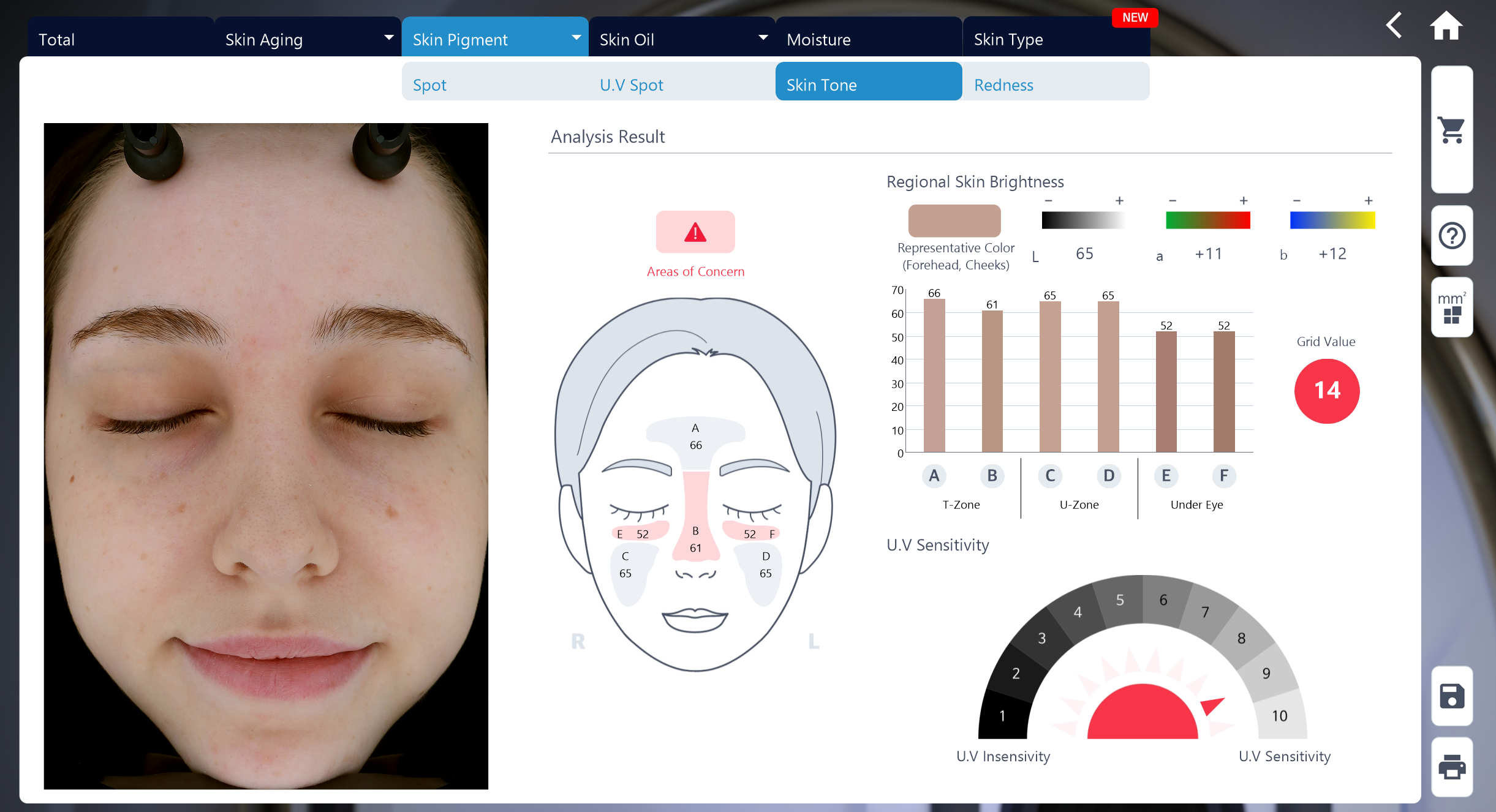
Because skin tone varies according to ethnicity, genetic characteristics, and each person’s natural skin color, lighter skin should not automatically be evaluated as healthier or better.
JANUS Pro’s skin-tone analysis compares brightness and color differences among facial regions to assess how evenly the skin tone appears.
If large skin-tone differences are detected, the following results should also be reviewed:
- Distribution of brown pigmentation
- Redness and post-inflammatory erythema
- Shadows beneath the eyes
- Brightness differences between the left and right sides of the face
- Makeup residue
If pigmentation and redness are both present, a staged treatment plan may be established by distinguishing their respective causes rather than selecting a single procedure.